Field Story · Molokai, Hawaiʻi
A May Hunt with an Old Friend from Homer
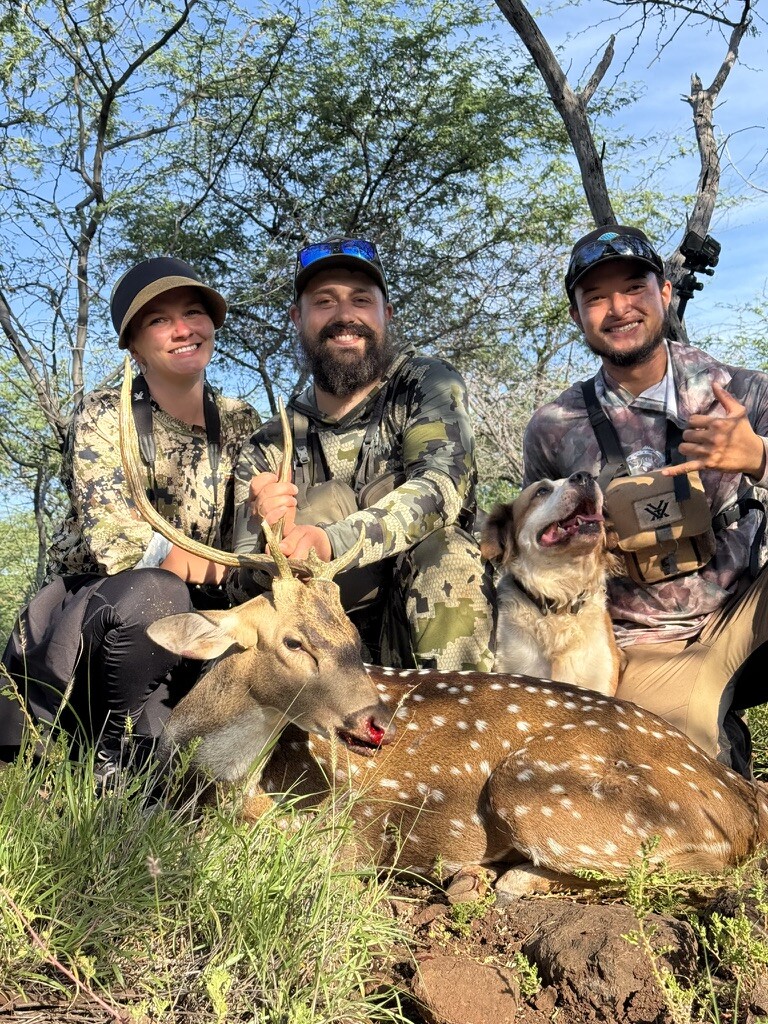
David and his wife traveled from Homer, Alaska, to Molokai for a memorable axis deer hunt, harvesting four deer and bringing home nearly 100 pounds of meat.
Crosshairs on a big-bodied spike, a doe standing calm beside him — and we hadn't even reached the hunting grounds yet. That's how the last afternoon of David's hunt started: barely through the gate, already glassing two deer moving through the grass. We let ourselves admire them a little longer than we needed to before easing the truck forward and pushing higher into the mountains.
David and his wife are longtime friends of mine — I first met David years ago as a young commercial fisherman, long before either of us pictured hunting axis deer together on Molokai. This May, they flew out from Homer, Alaska for exactly that. By the end of the trip we'd harvested four deer — one healthy buck and three does — totaling around 100 pounds of meat, packed for the trip home in reused Homer fish-shipping boxes lined with Styrofoam — the kind built to keep fish and game meat cold for up to four days without refrigeration or a freezer — along with a cape and horns off the buck.
But that spike-and-doe sighting was just the opening act. Once we were past them, we were fully in hunting mode — voices low, a round chambered, binoculars up, eyes on the wind and ears tuned to anything that might give away our next shot. Two friends from Alaska and a boy from Molokai, working our way up a ravine, hoping to spot and stalk before popping out over the valley edge to glass a gulch we hadn't hunted before — unfamiliar travel corridors, thick with kiawe thorn and brush, hardened by the harsh climate of Molokai's south shore. Not a place for anything but real boots.
When I look back on a hunt and ask myself how it went, I don't just think about what we took home. I think about whether we spooked anything out of its bed without getting a shot. A successful hunt, to me, is making your way into the mountains without blowing out a herd, harvesting what you're given a fair shot at, and walking back out having left nothing behind — no rubbish, no wrappers, no water bottles, no torn cloth. That's the standard.
Being able to take an animal like this is a blessing — and it shows in how we carry ourselves coming back down the mountain.