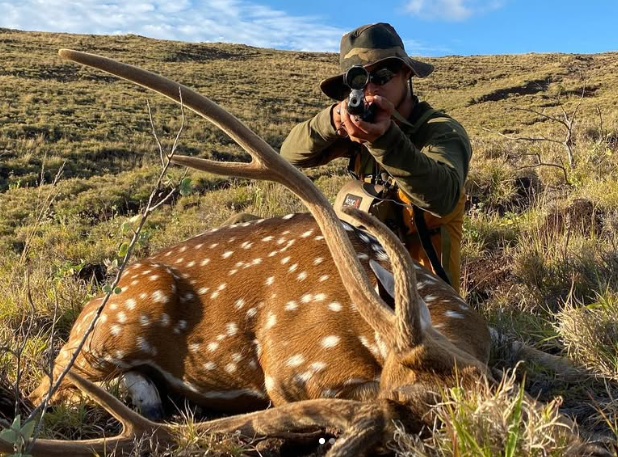
Rifle Hunt
Molokai
50,000 axis deer. Private land. No lottery. A local guide who knows every ridge.
Start Your HuntNo Lottery.
No Crowds.
No Ceiling.
Molokai's axis deer herd grows 20–30% per year with no natural predators and no public hunting pressure on private land. What that means for you: mature bucks reaching trophy sizes rarely seen in free-range hunting, multiple encounters every outing, and a guide who has spent his life learning this terrain from the inside. The highland ridgelines give rifle hunters sight lines of 300 to 600 yards across open volcanic bench country. This is a proper rifle hunt — not a close-quarters ambush situation.
Day by Day
The visitor package is a 3-day hunt. Here's how the time in the field is structured.
You land at Hoolehua, grab your rental truck, and you're at the ranch in 15 minutes. No long drives, no wasted hours. That afternoon we glass the highland benches and learn the property — where the deer are bedding, which bucks are moving, what the wind is doing at elevation. First light is tomorrow. We're not in a rush, but we're ready.
We're on a glassing position before the sun breaks the ridge. Molokai's thermals are predictable in the first hours — cool air pulls down the valleys, deer are still moving from their overnight feeding. Shot windows open between 5:30 and 8 a.m. This is when mature bucks show themselves. We identify, we judge, we get into position. If the opportunity is right, you take your shot.
We use the final first-light and evening windows, then field dress and pack out your harvest. 'Āina Guardian handles optional paid processing directly — quartering, deboning, vacuum sealing, or custom cuts. Antlers are cleaned and secured for travel.
Terrain &
Tactics
Glass First, Move Second
Molokai's highland benches give you sight lines of 300 to 600 yards. We glass from elevated positions before we ever move. Rushing the terrain burns your thermal advantage and bumps deer you never see. Patience is the tactic.
Hunt the Thermals
The volcanic terrain creates predictable thermal shifts. Down-valley in the morning before 9 a.m. Up-valley in the heat of the afternoon. Plan every approach around the thermals — not just the prevailing wind. Axis deer have exceptional noses. Get your scent wrong once and the herd is gone.
Read the Ridgeline
Mature bucks use the same benches and saddles repeatedly. Once we identify where a good buck is traveling, we set up ahead of him — not behind. Axis deer are not white-tailed deer. They don't spook to the next county. They relocate. Know the terrain and you know where they'll be.
Shot Distances
Expect shots from 150 to 400 yards. The open highland terrain rarely gives you a 50-yard chip shot. Bring a rifle you've confirmed at 300 yards from field positions — prone, sitting, and off a pack. If you can't make that shot at the range, don't try it on a deer.
Fishing Add-On
- →Bring: a compact collapsible rod and reel plus light-duty surf-casting line.
- →Provided here: hooks, bait, and the rest of the tackle. No need to fly with a full tackle box.
Hearing Protection
Jungle spot-and-stalk shots can happen close to the guide, trees, and other hard surfaces. Bring firearm-rated electronic protection that cuts impulse noise while its ambient microphones let you hear instructions and surrounding activity.
Bluetooth or consumer active noise cancellation by itself is not firearm hearing protection. Check the product's NRR, fit it correctly, keep ambient volume at a safe level, and follow the manufacturer's instructions.
Meat Cooler
A durable, leak-resistant soft cooler bag is the easiest travel option because it packs down on the flight in. Look for a large model in the YETI Hopper M30 or RTIC Soft Pack 40 class rather than a rigid household cooler.
The fallback is a rigid insulated Styrofoam fish-shipping box inside a protective outer carton. Plan around a 45–50 lb total packed load, not 45–50 lb of meat alone.
Fish boxes vary, so measure the exact outside length × width × height and weigh the empty box before packing. Confirm the final dimensions, packed weight, packaging, fees, and acceptance with Mokulele and every connecting carrier. If using dry ice, get airline approval and follow the FAA's venting, marking, and 5.5 lb maximum guidance.
FAA Dry Ice GuidanceTrophy Standards
A mature axis buck on Molokai has three points per side — brow tine, bez tine, and a forked top — giving six scoreable points plus two main beams under the SCI method. Main beam length is the primary driver of score.
A score of 28 inches SCI is a good trophy. 30+ inches is excellent. 33+ inches is exceptional by any measure worldwide. Main beams over 26 inches on a heavy-framed buck will score well and are achievable on this property.
More importantly: Molokai bucks that have grown undisturbed for multiple years develop the heavy bases, deep forks, and long brow tines that make axis deer one of the most visually striking trophies in the world. You're not settling for something here.
Scored using the Safari Club International (SCI) method. Both SCI and Rowland Ward records can be achieved on this property.
Gear List
Rifle
- 7mm Rem Mag, .300 Win Mag, .308, .30-06 — all proven here
- Quality variable optic: 3-12×50 or 4-16×50
- Confirmed zero at 300 yards before you leave home
- 20 rounds minimum — shoot your ammo, not borrowed rounds
- Bipod or shooting sticks (strongly recommended)
Optics
- Binoculars 10×42 minimum — you'll use these more than your rifle scope
- Rangefinder (required — not optional)
- Spotting scope or monocular for extended glassing sessions
Clothing & Field
- Lightweight camo or earth tones — no blaze orange required on private land
- Boots broken in, not new. Molokai terrain is rocky volcanic lava
- Layers — mornings are cool, midday is hot, plan for both
- Rain shell — weather can roll in fast from the north
- Gaiters if you have them — kiawe thorns are no joke
Leave Behind
- Hard-shell roller bags (weight limits on Mokulele)
- Scent-control sprays (redundant here — focus on wind instead)
- White or bright clothing
- Noise — axis deer are alert animals. Move quiet, talk less
What You Get
- Three-day Standard Trophy Package on private land on Molokai
- Choose rifle or archery at the same $2,850 per-hunter price
- Personal, one-on-one guiding
- Door-to-door pickup from the airport or hotel, or meet at the farm with your rental car and travel together to the hunting grounds
- Field-dressing guidance: you do the work while the guide coaches
- Game bags provided
- Fresh farm fruit and refreshments after the hunt (informal, not a catered meal plan)
Your Responsibility
- Your own Hawaii hunting license — no tags are required for this hunt
- Packing out your own harvest
- Personal gear: water, sun protection, long sleeves, long pants, hiking boots, hat, sunglasses, day pack, and knife
- Rifle, ammunition, and personal optics
$2,850 per hunter for 3 days. Choose rifle or archery at the same price. Meat processing is not included; ʻĀina Guardian bills the processor directly. Lodging is not included; see housing options.
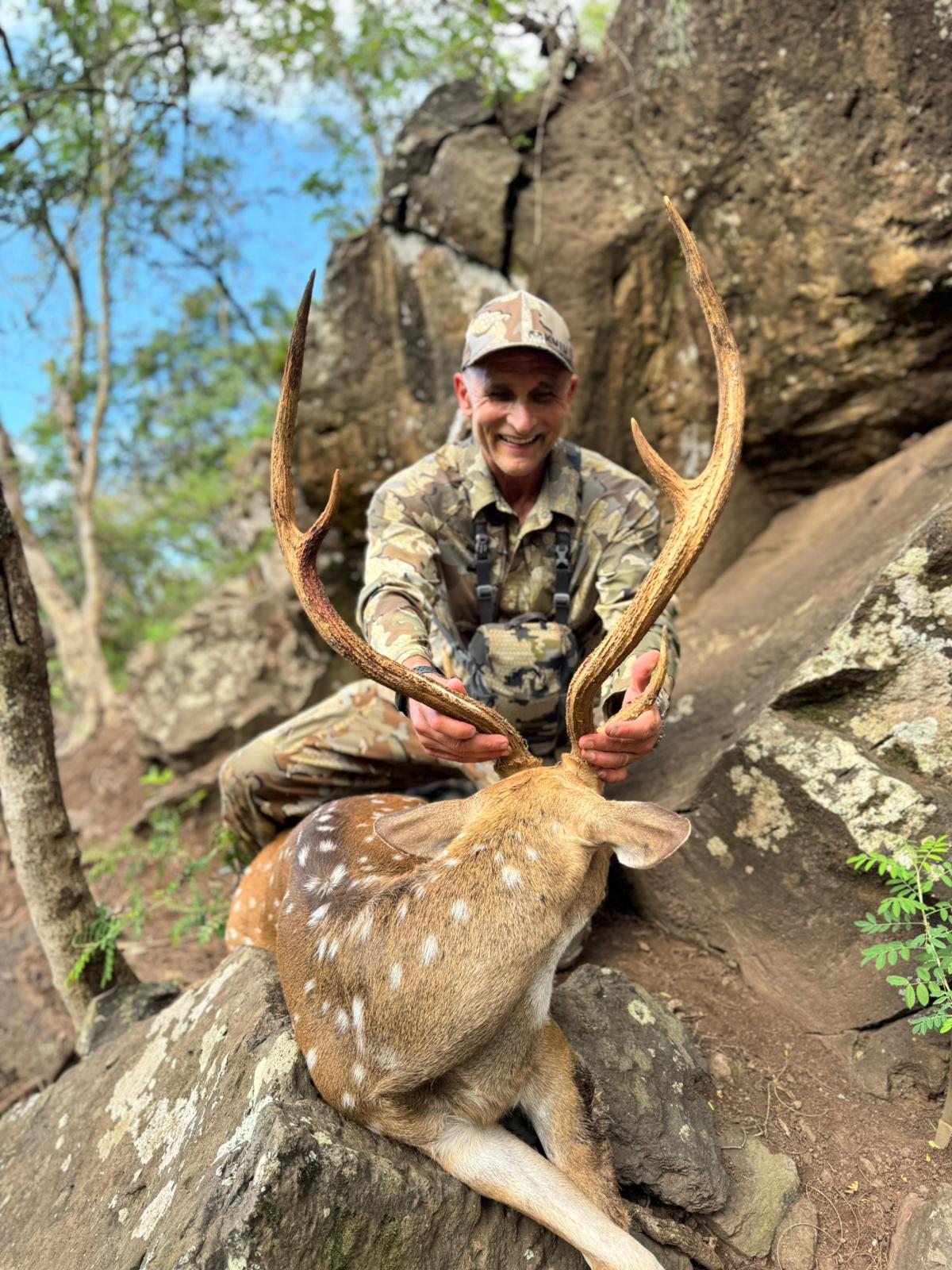
"You don't need a lottery.
You need a guide who knows this island."
FAQ
What caliber should I bring?+
Do I need a Hawaii hunting license?+
What shot distance should I be prepared for?+
How many deer will I see?+
Is there a trophy minimum or bag limit?+
Can I bring two hunters?+
What happens after the kill?+
Do I need to be in great physical shape?+
Let's Talk
No contact form. No booking engine. Message me directly on WhatsApp — tell me your dates, party size, and what you're after. I'll tell you if I can make it happen.
Message on WhatsApp+1 808-646-0214